
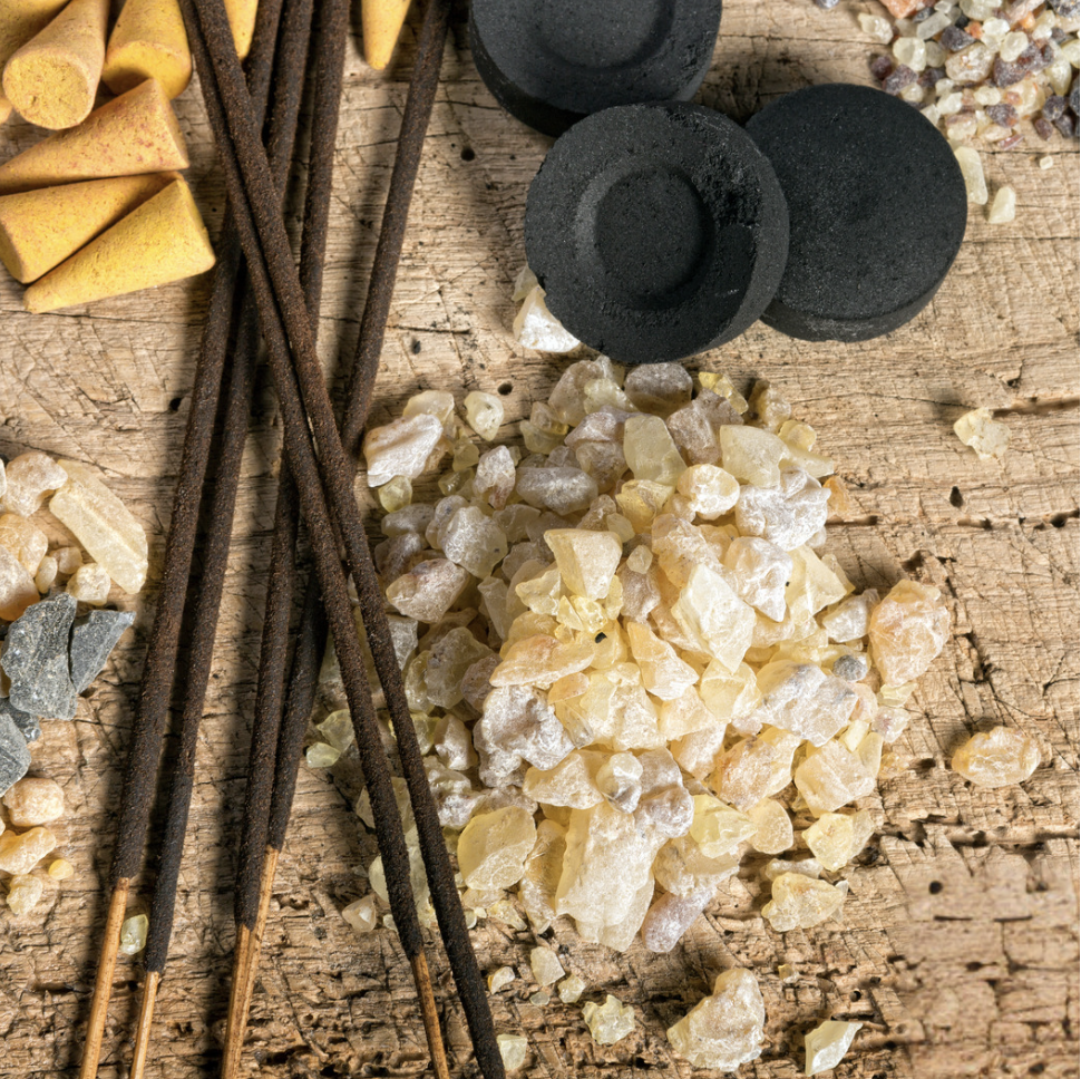
Every wisp of smoke carries a story. For millennia, humans have burned fragrant herbs, resins, and woods to mark moments of reverence, to purify the air, and to connect with something deeper than words can reach. Today, few of us make our own homemade incense—yet the process remains as accessible as ever, especially when the raw material grows wild all around us. On Long Island and across much of North America, one plant dominates marsh edges and roadside wetlands: Phragmites australis, the common reed. However, invasive and often unwelcome, this tall, whispering grass hides a secret. With a little knowledge and care, its dried stalks can become a soft, slow-burning charcoal—the same carbon our ancestors used in ancient incense and pigments.
Making homemade incense from Phragmites [frag-ˈmī-ˌtēz] turns an ecological nuisance into a sensory bridge to the past. It’s alchemy in your hands: a transformation from invader to offering, from waste to wisdom, from reed to ritual.
Materials will be provided.